

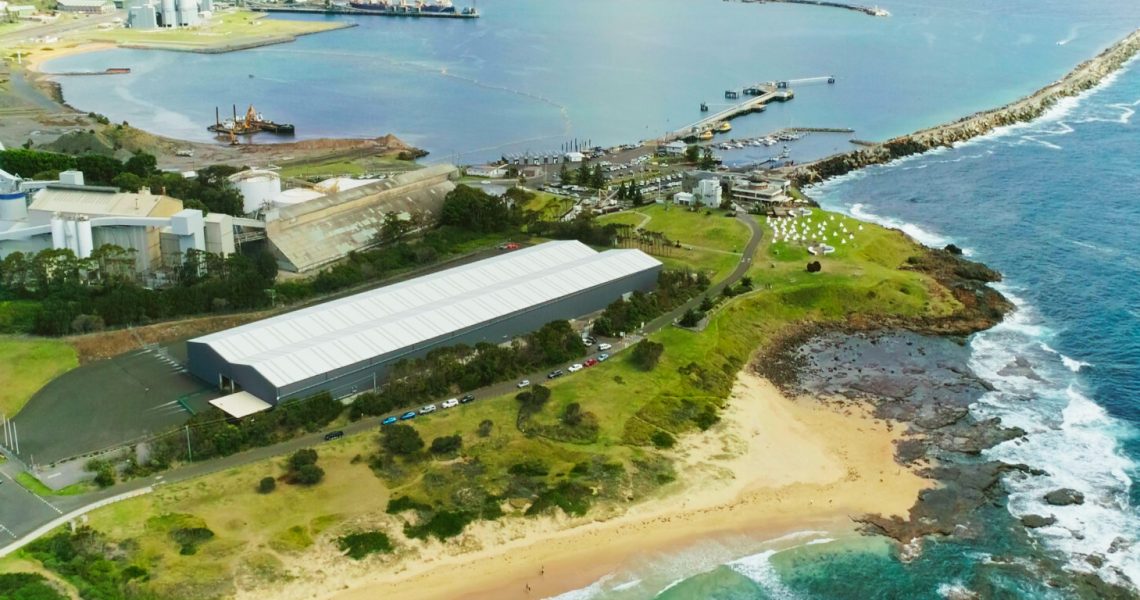
Wollongong, Australia, 24 September 2026: Australian electrolyser manufacturer Hysata and global green fuels developer InterContinental Energy (ICE) have entered an engineering collaboration to address the single biggest barrier to green hydrogen at scale: cost, a critical factor in making giga‑scale projects bankable for global customers and financiers.
Under the agreement, Hysata will deliver the electrolyser engineering design and performance data for ICE’s Digital Twin Optimisation Framework, supporting ICE’s patented modular P2(H2)Node architecture, designed in Western Australia and now being licensed to developers building some of the world’s largest green fuels projects.
The economics are decisive. Electricity accounts for up to two-thirds of the cost of producing green hydrogen, so efficiency determines whether a project is bankable. Hysata’s capillary-fed electrolyser attacks the problem at the cell level: rather than submerging electrodes in liquid, it draws electrolyte up through a capillary, eliminating the gas bubbles that waste energy in conventional designs. The result is 95 per cent system efficiency, around 20 per cent better than incumbent systems, with a simpler balance of plant that lowers installed cost and complexity.
From the same gigawatt of renewable generation, Hysata’s electrolysers produce around 20 per cent more green ammonia than incumbent systems: roughly 120,000 tonnes more every year, worth on the order of US$100 million annually at current prices.
The P2(H2)Node is ICE’s patented modular architecture that co-locates various electroyser plants with wind and solar generation, eliminating the need for long-distance transmission, lowering costs and improving overall system efficiency. Its standardised design and Digital Twin Optimisation Framework enable developers to optimise integrated project configurations for their specific resources, technology choice and markets. Each one-gigawatt Node is designed to incorporate approximately 800 MW of hydrogen production alongside up to 200 MW of data centre capacity.
The architecture is patented in more than 50 countries and is now being licensed, following the first Node licence signed earlier this year. Its standardised design and Digital Twin Optimisation Framework aim to improve design certainty, cut capital and operating costs by 10 to 20 per cent, and shorten delivery timelines.
Under the collaboration, Hysata will provide basic engineering design and Digital Twin inputs for an electrolyser system that can form part of the P2(H2)Node architecture. Standardising and digitally optimising that design before construction gives developers cost and performance certainty at the earliest stage, de-risking the large-scale projects that follow and giving customers and financiers the confidence to commit capital.
For Hysata, the agreement is the latest step in a rapid commercial progression: a six-month operational trial with Saudi Arabian energy company ACWA Power in 2025, a first commercial order from a global customer in June 2026, and now an engineering role in one of the most ambitious green fuels architectures in the market.
The collaboration is almost four years in the making. During that time, the two companies have worked closely to understand what giga-scale projects demand of an optimal electrolyser design, sharing conference stages and hosting site visits. ICE’s input as a developer has directly shaped Hysata’s product over that period, making its design into the P2(H2)Node a natural progression of the working relationship rather than a new engagement.
Green hydrogen, made by using renewable electricity to split water, is critical to decarbonising the sectors that cannot simply electrify, shipping, aviation, steel and heavy industry. Much of it will move as green ammonia, the most practical way to store and ship hydrogen at scale, and one of the products ICE’s projects are designed to produce and export to global markets. Conventional ammonia production alone accounts for around 1.3 per cent of global CO2 emissions; a single gigawatt of electrolysis can produce up to around 700,000 tonnes of green ammonia a year, displacing up to 1.7 million tonnes of CO2 annually.
As demand shifts toward clean molecules, the regions richest in wind and solar, and best positioned on low-cost design and technology, are set to become the exporters of the next energy era.
“Hysata’s differentiated technology offers the step change electrolysers need to drive down the cost of green hydrogen. High system efficiency dramatically reduces the amount of power a project consumes, which cuts both capex and the levelised cost of hydrogen. These are big projects, and we’re excited to be involved.”
— Paul Barrett, CEO, Hysata
“Standardisation is how green fuels reach giga-scale. This collaboration enables us to model and optimise Hysata’s ultra-high-efficiency electrolyser technology within the P2(H2)Node framework, giving developers greater cost and performance certainty for large-scale projects.”
— Alex Tancock, CEO, InterContinental Energy
About InterContinental Energy
Based in Perth, Western Australia, InterContinental Energy has been developing gigawatt-scale clean energy hubs since 2014, with a portfolio exceeding 100GW across Australia and the Middle East. Its desert locations combine strong night-time winds with world-class daytime solar, delivering high utilisation rates and competitive energy costs.
With a global multidisciplinary team, InterContinental Energy develops integrated solutions for green power, green fuels and green compute. Its patented P2(H₂)Node™ architecture integrates renewable generation, hydrogen production and storage, and co-located data-centre capability in a modular, repeatable system — the bankable path to delivery at multi-gigawatt scale.
Working alongside First Nations and other communities, project partners and strategic investors, InterContinental Energy creates enduring shared value to deliver Energy for a Connected World.
For more information: intercontinentalenergy.com